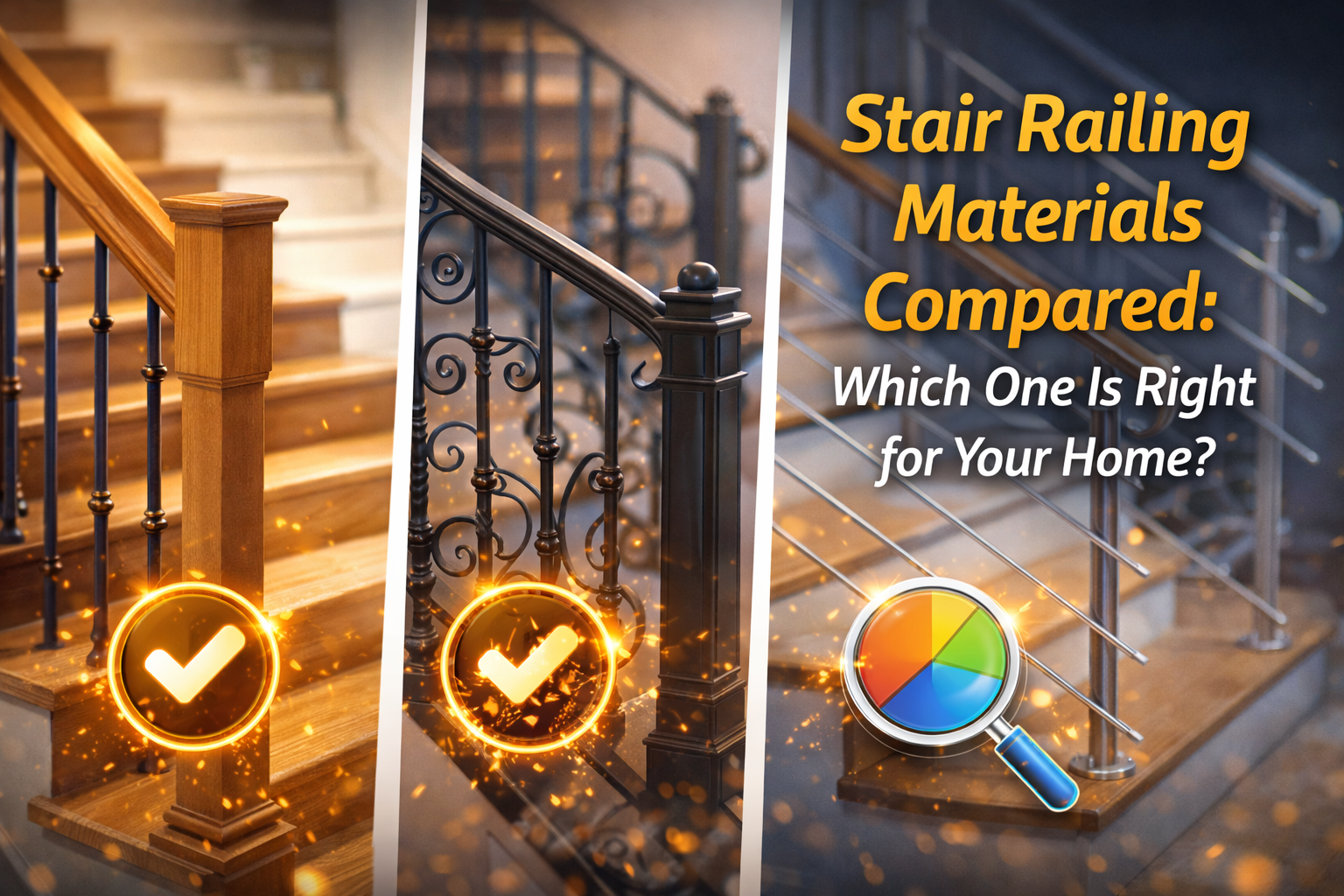
When homeowners start planning a stair railing project, the first question is usually about design. The second, almost immediately after, is about materials. And it’s a fair question to spend time on—because the material you choose determines not just how your railing looks on day one, but how it performs five, ten, and twenty years down the road.
There’s no single right answer. Wrought iron looks stunning on a craftsman bungalow but can feel out of place in a minimalist modern home. Glass railings open up a space beautifully but require more maintenance than most people expect. Aluminum is practical and affordable but may not deliver the premium look you’re envisioning for a formal staircase.
This guide breaks down the most popular stair railing materials in plain terms—what each one does well, where it falls short, and which types of homes and homeowners it suits best. By the end, you’ll have a clear picture of which direction makes the most sense for your project.
Wrought Iron: Classic Strength With Lasting Character
Wrought iron has been used in architectural metalwork for centuries, and it remains one of the most sought-after materials for stair railings in both traditional and transitional homes. The reason is simple: nothing else looks quite like it.
The defining quality of wrought iron is its workability. A skilled metalworker can bend, twist, and shape it into virtually any design—from simple geometric balusters to elaborate scrollwork patterns that become a focal point in a room. For homeowners who want a railing that’s genuinely one-of-a-kind, wrought iron is often the first material to consider.
On the structural side, wrought iron is exceptionally strong. A properly installed wrought iron railing will outlast the staircase beneath it. It handles high traffic well, withstands impact without deforming, and when maintained properly, shows no degradation over decades.
The maintenance requirement is the tradeoff. Iron is susceptible to rust, particularly in humid environments or in outdoor applications exposed to rain. Preventing rust requires a proper protective finish at installation and periodic touch-ups over the years. Scratches and chips in the coating need attention before moisture gets underneath. For outdoor stair railings in climates with significant rainfall, wrought iron requires a more attentive maintenance routine than some homeowners want to commit to.
In Southern California, where humidity stays relatively low and rain is infrequent, wrought iron performs particularly well outdoors. The climate simply doesn’t create the corrosive conditions that cause problems in wetter regions. That said, homes near the coast face more salt air exposure, which changes the calculus somewhat.
Best for: Traditional, craftsman, Spanish colonial, and Mediterranean-style homes. Homeowners who want custom decorative designs. Interior staircases and outdoor applications in dry climates.
Aluminum: The Low-Maintenance Workhorse
Aluminum has grown enormously in popularity over the past two decades, and it’s easy to understand why. It offers many of the visual characteristics of wrought iron—dark powder-coated finishes, clean lines, available in various profile styles—without the rust vulnerability.
The key difference is aluminum’s natural corrosion resistance. It doesn’t rust. Rain, humidity, coastal salt air, pool splash zones—none of these conditions degrade aluminum the way they attack iron. For outdoor stair railings on patios, decks, and entry staircases, aluminum is often the most practical choice available.
Modern powder-coating processes have also dramatically expanded aluminum’s design range. It’s available in dozens of colors, from classic black and bronze to custom shades that match your home’s trim or exterior palette. The finish is durable, resists fading in UV-heavy environments, and typically requires nothing more than an occasional rinse to keep looking sharp.
The tradeoff with aluminum is feel and customization. It’s lighter than iron—which some homeowners experience as feeling less substantial underhand—and it can’t be worked into the same intricate custom designs that skilled ironworkers produce. Most aluminum railing systems are component-based, meaning they’re assembled from pre-manufactured parts rather than fabricated from scratch. This limits design uniqueness but also makes installation faster and cost more predictable.
For homeowners who want durability and good looks without ongoing maintenance obligations, aluminum hits a strong sweet spot. It’s also generally more affordable than wrought iron, particularly when custom metalwork is factored into the iron pricing.
Best for: Outdoor staircases, pool areas, coastal properties, and any application where low maintenance is a priority. Modern, contemporary, and transitional home styles.
Wood: Warmth and Tradition, With Caveats
Wood railings have a warmth and familiarity that no metal replicates. In a traditional interior, a well-crafted wood railing with turned balusters and a smooth handrail feels organic and inviting in a way that speaks to generations of home design.
Interior wood railings perform reliably when they’re properly sealed, finished, and kept away from moisture. They can be stained or painted to match virtually any interior color scheme, refinished when they show wear, and repaired in sections without full replacement. For indoor applications in stable environments, wood is a practical and beautiful choice.
Outdoor wood railings are a different story. Wood and moisture have a complicated relationship. Even with proper sealing and paint, wood exposed to rain, dew, and direct sun will check, crack, peel, and eventually rot if maintenance is deferred. Southern California’s UV intensity accelerates finish degradation faster than many homeowners expect. Outdoor wood railings can look great for years with consistent care—but that care is genuinely necessary, not optional.
For homeowners considering wood for outdoor use, the realistic question is: am I willing to sand, repaint or re-stain this railing every few years? If the answer is yes, wood can work well. If the answer is no, a more weather-resistant material will serve better long-term.
Best for: Interior staircases in traditional and farmhouse-style homes. Homeowners who want maximum design flexibility and are willing to invest in maintenance. Not recommended for low-maintenance outdoor applications.
Glass: Modern, Open, and View-Preserving
Glass railing panels have become a signature element of contemporary and modern home design, and the visual effect they create is genuinely striking. By eliminating the visual mass of balusters, glass railings make staircases feel open and light, preserve sightlines, and make spaces feel larger—a quality that’s especially valuable in homes where the staircase is adjacent to a great room or overlooks a view.
The glass used in railings is tempered safety glass, engineered to withstand significant impact without shattering dangerously. When properly installed with appropriate framing or channel systems, glass railings meet all relevant building codes and are structurally sound.
The maintenance reality of glass railings is something many homeowners underestimate before installation. Glass shows fingerprints, dust, and smudges readily and conspicuously. In a high-traffic area like a staircase used by children or pets, keeping glass panels clean requires regular attention. This isn’t a dealbreaker, but it is a genuine consideration. Glass railings that aren’t maintained look significantly worse than traditional balusters in the same condition.
Cost is also a factor. Tempered glass panels and the hardware systems required to mount them properly tend to sit at the higher end of the railing cost spectrum. For homeowners committed to the aesthetic, the investment is often worth it. For those who are drawn to the look but uncertain about the maintenance commitment, it’s worth thinking through honestly before proceeding.
Best for: Contemporary, modern, and minimalist home styles. Properties with views worth preserving. Homeowners who are committed to regular cleaning and maintenance. Interior applications with high visual impact.
Cable Railing: A Modern Alternative Worth Considering
Cable railing systems—horizontal or angled stainless steel cables tensioned between posts—deserve mention as a growing option for homeowners who want an open, modern look without the cleaning demands of glass.
Cable systems are visually lightweight, rust-resistant, and durable. They’re popular on decks and outdoor staircases where preserving a view matters. The aesthetic is distinctly industrial-modern, which suits some home styles well and clashes with others.
One practical consideration: cable systems require periodic tension checks. Cables can loosen over time, particularly in climates with significant temperature variation, and loose cables may not meet building code requirements for baluster spacing. This is easy maintenance, but it does need to happen.
Best for: Contemporary and industrial-style homes. Decks and outdoor staircases with views. Homeowners who want an open look without glass maintenance.
Making the Right Choice for Your Staircase
The best railing material is the one that fits your home’s style, your climate, your maintenance preferences, and your budget—in that order. There’s no universal correct answer, but there is usually a clear best fit once you’ve thought through those four factors.
For homeowners in the Inland Empire, working with a local contractor who understands how Southern California’s climate and architectural character interact with different materials makes the selection process significantly easier. A professional who has installed all of these systems locally can walk you through real-world performance in your specific conditions, not just catalog descriptions.
If you’re ready to explore your options with someone who has spent decades working on staircases throughout the region, Stair Railing Installation Corona specialists at Joe’s Fencing & Gates Corona offer free consultations and can help you work through material selection, design options, and code requirements before you commit to anything.
A stair railing is one of those features that shapes how every person who enters your home experiences the space. It’s worth getting right.