Michigan has always been defined by its relationship with water. From the Great Lakes to thousands of inland lakes and ponds, water is woven into the identity of the state. In the Detroit metropolitan area, property owners increasingly recognize the value of ponds both newly constructed and restored as landscape features that provide aesthetic beauty, support local wildlife, offer recreational opportunities, and in some cases improve drainage on larger rural and semi-rural parcels.
What Is Pond Digging?
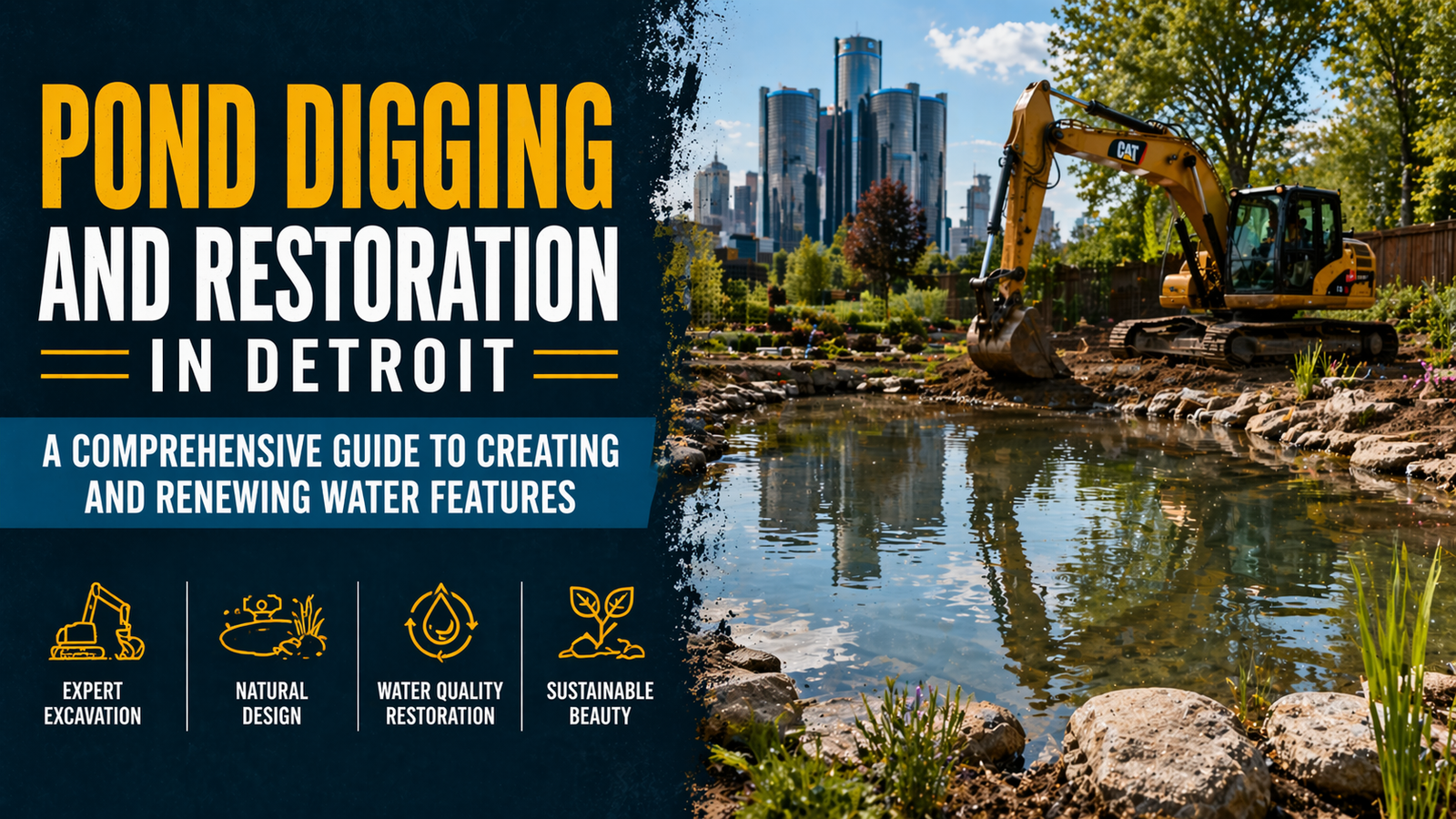
Pond digging, also called pond excavation or pond construction, is the process of excavating a designated area of land to create a body of standing water. The scope of a Pond Digging and Restoration Detroit project can range from a small ornamental water feature in a residential backyard to a large recreational or agricultural pond on a rural property.
The process involves much more than simply digging a hole. Successful pond construction requires site assessment, soil evaluation, water source identification, and careful planning of the pond’s shape, depth, and bank slopes to create a stable, functional, and sustainable water feature.
Types of Ponds Constructed in the Detroit Area
Property owners in Southeast Michigan pursue pond construction for a variety of purposes. Ornamental ponds are designed primarily for visual appeal and are common in residential landscapes. They may include features such as fountains, waterfalls, and aquatic plantings that enhance the garden environment.
Recreational ponds are larger water bodies designed for swimming, fishing, kayaking, or simply enjoying the waterfront. In the Detroit metro area and surrounding rural counties, stocking a recreational pond with native Michigan fish species such as bluegill, bass, or channel catfish is a popular goal for rural landowners.
Agricultural and stormwater management ponds serve practical purposes, providing water storage for irrigation, supporting livestock operations, or capturing and slowly releasing stormwater runoff from developed areas. These ponds play an important role in managing the hydrology of larger properties.
Wildlife ponds are designed to attract and support native species, including waterfowl, frogs, turtles, and aquatic insects. Native plantings around the pond’s edge create habitat and help stabilize the banks against erosion.
Key Considerations Before Digging a Pond in Michigan
Michigan has specific regulations governing pond construction, particularly in areas near existing water bodies, wetlands, or within designated floodplains. The Michigan Department of Environment, Great Lakes, and Energy (EGLE) regulates activities that impact water resources, and permits may be required depending on the size, location, and design of the proposed pond.
In addition to state-level permitting, local municipalities and townships in the Detroit area may have their own zoning requirements or setback rules governing the proximity of a pond to property lines, structures, and public roads. Consulting with local authorities and an experienced excavating contractor before beginning a pond project is an essential first step.
Soil type is one of the most important site-specific factors in pond construction. Ponds require a layer of relatively impermeable soil typically clay to retain water without constant seepage. Sandy or highly permeable soils may require the installation of a liner to make a pond hold water. A soil evaluation, including test holes dug to the proposed pond depth, reveals the composition of the soil and the depth of the water table, both of which directly influence whether a pond is feasible at a given location.
The Pond Digging Process
Once site assessment and permitting are complete, excavation begins. The contractor marks the pond’s outline according to the design plan and uses excavators to begin digging. The typical excavation sequence starts at the center of the pond and works outward, with the deepest point established first.
Bank slopes are a critical design element. Side slopes that are too steep lead to erosion and bank collapse, particularly during periods of fluctuating water levels. For recreational ponds intended for swimming or wildlife, gradual slopes of 3:1 or 4:1 are standard practice, providing stable banks and gradual entry points for both people and animals.
Excavated soil is either spread on the surrounding property to grade the area around the pond, used as fill elsewhere on the site, or hauled away if there is excess. In some cases, the excavated material is used to build berms around the pond’s perimeter, which can provide privacy, visual interest, and additional water retention.
After excavation is complete, the banks are seeded with erosion-resistant grass or planted with native vegetation to stabilize the soil and prevent sediment from washing into the pond. Establishing healthy vegetation around the pond is one of the most effective long-term maintenance strategies available.
Pond Restoration: Bringing Existing Ponds Back to Life
Many properties in the Detroit area have existing ponds that have degraded over time. Sediment accumulation, invasive aquatic vegetation, erosion of banks, and changes in water quality are among the most common problems affecting older ponds. Pond restoration is the process of addressing these issues to return a pond to a healthy, functional condition.
Dredging is one of the most common restoration techniques. Over time, ponds naturally accumulate sediment leaves, organic matter, and soil particles that wash in from the surrounding area gradually fill the pond from the bottom up, reducing depth and water volume. Dredging involves removing this accumulated sediment using specialized equipment, restoring the pond to its original depth and improving water quality in the process.
Invasive aquatic vegetation is another common issue. Species such as cattails, Eurasian watermilfoil, and certain algae can rapidly overtake a pond if left unmanaged, reducing dissolved oxygen levels and crowding out beneficial native species. Restoration may include mechanical removal, targeted treatment, and the introduction of native aquatic plants that provide ecological benefit without the aggressive growth patterns of invasive species.
Bank stabilization and reshaping is often part of restoration work. Eroded banks not only look unsightly but contribute sediment to the pond and can eventually lead to structural failure of the pond’s edge. Restoration contractors rip, regraded, and revegetate eroded areas to restore bank integrity and prevent continued sediment input.
Water Quality and Ecosystem Considerations
A healthy pond supports a balanced aquatic ecosystem. Proper construction and restoration practices account for the relationships between water depth, sunlight exposure, dissolved oxygen, nutrient levels, and aquatic life. Shallow ponds with excessive nutrient input from lawn fertilizers or agricultural runoff are prone to algae blooms that can deplete oxygen and harm fish populations.
In the Detroit area, careful attention to the pond’s watershed the land area that drains into it is important for long-term water quality management. Buffer zones of native vegetation around the pond’s perimeter filter nutrients and sediment before they reach the water, significantly reducing the maintenance burden and supporting a healthier aquatic environment.
Final Thoughts
Pond digging and restoration in Detroit represent a meaningful investment in both property value and ecological health. Whether the goal is a new recreational pond, a restored ornamental water feature, or a functional agricultural water body, the process demands careful planning, proper permitting, and skilled excavation work. Michigan’s regulatory environment and soil conditions add important layers of complexity, making the expertise of an experienced local contractor a valuable asset for any pond project.