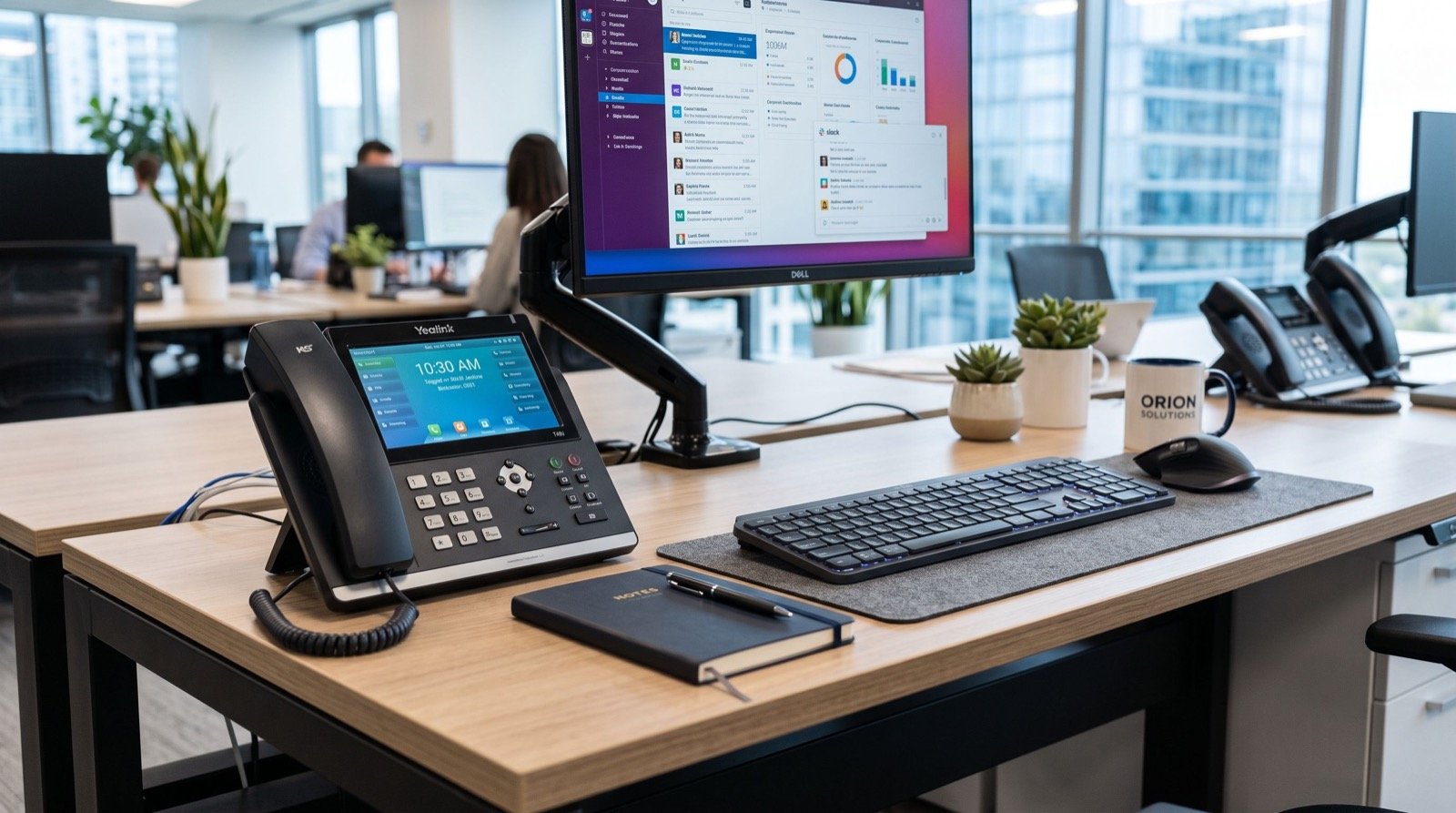
Space is a currency in most workplaces, and few things waste it as quietly as bulky telephones. Reception counters, hotel rooms, hospital corridors, factory walls, and compact retail desks all need a way to make and receive calls, yet none of them have room for a sprawling handset with a tangle of cords. This is where compact and wall-mountable IP phones quietly solve a problem most people never articulate: professional communication that fits where a normal desk phone simply cannot.
This article explores the often-overlooked category of small-footprint business phones, the settings where they shine, and how to choose one without sacrificing the call quality and features that make a phone worth having. It is written for anyone furnishing a space where every centimetre counts but reliable calling still matters.
The Overlooked Value of a Small Footprint
Full-size desk phones assume a desk. Plenty of places that need a phone have no such thing. A hotel corridor needs a courtesy line. A warehouse aisle needs a point to reach the office. A hospital ward needs bedside communication. A busy checkout counter needs a phone that does not crowd out the card machine and the receipt printer. In each case, a compact or wall-mounted unit turns an awkward constraint into a clean solution.
Smaller does not have to mean lesser. Modern compact IP phones carry the same voice-over-internet capabilities as their larger cousins, connecting to the same phone system and offering the essential functions a given location actually uses. What they shed is bulk, not competence, which is exactly the trade a space-constrained environment wants.
Where Compact Phones Prove Their Worth
The natural homes for small-footprint handsets share a common trait: the phone is essential but must not dominate the space. Once you start looking, these settings appear everywhere across Pakistani businesses, and the same range of fanvil ip phones in Karachi that suits a large office also covers these tighter spots, from hospitality to healthcare to industry.
Hotels and guesthouses lean on them for tidy room phones and staff-only corridor lines. Hospitals and clinics use them as bedside units and clean, wipeable ward phones. Warehouses and factories mount rugged versions at fixed communication points along the floor. Retail counters favour slim handsets that leave room for the actual transaction, and lifts, entrances, and stairwells rely on them as emergency and intercom points. What unites these very different places is a single requirement: the phone must be present and reliable without ever getting in the way.
In every one of these, the alternative, a bulky phone perched awkwardly or an employee walking away to find one, costs either space or time the business would rather keep.
A Purpose-Built Compact Option
Choosing a phone designed from the start for tight spaces beats trying to squeeze a full-size unit somewhere it does not belong. The Fanvil H2U is a good illustration of the category: a small, wall-mountable IP phone that delivers clear HD voice and the core calling functions a location needs, all in a body sized to sit unobtrusively where a standard phone never could. For a hotel room or a corridor station, that combination of clean audio and minimal footprint is precisely the point.
The lesson generalizes beyond any single model. When a phone must live on a wall or a narrow ledge, a device engineered for that role will always integrate more neatly and reliably than a desk phone forced into service with brackets and compromises.
Don’t Trade Away the Essentials
Compact does not license poor quality. The features that matter most in these settings are the ones callers notice immediately: clear, wideband audio so a message is understood the first time, and a dependable connection that does not drop mid-sentence. A tiny phone with muddy sound helps no one, and in a hospital or an emergency point, clarity can matter enormously.
Power over Ethernet is another quiet essential. A single cable carrying both data and power means no hunting for a wall socket behind a counter or beside a hospital bed, and no adapter to fail or go missing. For wall-mounted installations especially, one clean cable run is far tidier and more reliable than a phone tethered to a separate power brick.
Installation and Placement Details
Mounting a phone on a wall introduces considerations a desk unit never faces. Height matters: a corridor phone set too high or too low frustrates the people meant to use it. Cable routing should be planned so wires run cleanly inside or along the wall rather than dangling. And in public areas, the mounting must be secure enough to survive constant handling and the occasional knock.
Thinking through these details before installation saves rework later. It is far easier to plan cable paths and mounting points during a fit-out than to retrofit them once the walls are finished and the space is in use. A little planning here pays off every day the phone is used.
Getting the Setup Right the First Time
Because compact phones often live in hard-to-reach or public spots, getting the configuration right before mounting is doubly important. A phone bolted high on a warehouse wall is not somewhere you want to be reprogramming by hand. Pre-configuring each device, testing it on the actual network, and labelling it clearly turns installation into a quick, predictable task rather than a series of surprises.
Working with reliable local experts who understand both the hardware and the demands of these environments smooths the whole process. They can advise on placement, prepare the devices in advance, and ensure each phone registers correctly to your system before it ever goes on the wall. For a multi-room hotel or a large facility, that preparation is the difference between a clean rollout and days of troubleshooting.
Fitting Into the Bigger Picture
Compact phones rarely stand alone. They are usually one part of a wider communication system that also includes desk phones for offices and perhaps cordless units for mobile staff. The strength of IP telephony is that all of these connect to the same platform, so a call can move seamlessly from a reception desk to a corridor phone to a manager’s handset. Planning the compact units as part of that whole, rather than as an afterthought, ensures they enhance the system instead of sitting awkwardly beside it.
Key Takeaways
- Compact and wall-mounted IP phones solve calling needs where a full desk phone will not fit.
- They serve hotels, hospitals, warehouses, retail counters, and public access points especially well.
- Small size should not cost you clear wideband audio or a stable connection.
- Power over Ethernet keeps installations tidy with a single cable and no adapters.
- Plan mounting height and cable routing early, and pre-configure devices before installation.
Small Phones, Full Capability
The compact phone is proof that good business communication does not require a big footprint. In the tight corners and public spaces where a standard handset would be a nuisance, a well-chosen small-form IP phone delivers clear calls, clean installation, and seamless connection to the rest of your system. Treat these devices as deliberate choices rather than afterthoughts, plan their placement with care, and they will quietly serve some of the most demanding spots in your building for years, taking up almost no room while doing exactly the job you need.